
By Career Board
December 14, 2025
Are you a "Junior" DevOps engineer who feels stuck in "Tutorial Hell"? You know, that place where you watch endless videos on YouTube, copy-paste some YAML, but never actually touch a real production environment? Or maybe you are a system admin trying to break into the cloud, but every job asks for 5 years of experience for an "entry-level" role.
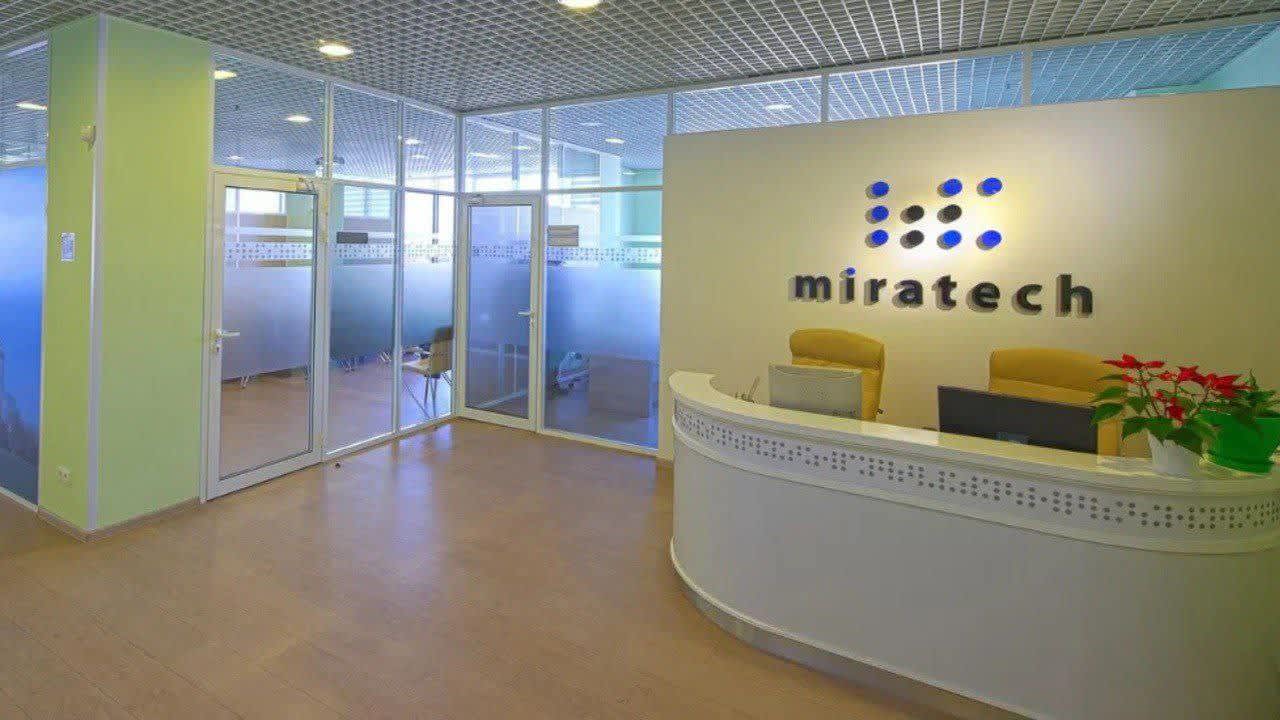
This job at Miratech in Hyderabad is your ladder out of that hole.
Why? Because it explicitly asks for Argo CD and GCP. Most junior roles will have you stuck on legacy Jenkins servers maintaining old pipelines. This role puts you right at the cutting edge of "GitOps"—the modern way of doing DevOps that the highest-paying Silicon Valley companies use. If you want to skip the "maintenance mode" phase of your career and jump straight into "building the future," you need to understand this JD.
✅ You Will Learn "GitOps" (The Holy Grail of DevOps)
The job description explicitly mentions Argo CD. This is huge. Most companies are still struggling to move away from clicking buttons in a UI. Argo CD is the standard for "GitOps"—where your infrastructure automatically syncs with your Git repository. By learning this now, as a junior, you are future-proofing yourself. In two years, every serious tech company will be using this. You will be an expert while others are just starting to learn it.
✅ You Are Supporting a "Global Leader" (High Stakes = High Growth)
The client is a "global leader in cloud contact center software." Think about what that means. Contact centers cannot go down. They need 99.999% uptime. They need low latency. Working on infrastructure that cannot fail is the best teacher in the world. You aren't just deploying a static website; you are managing complex, real-time communication systems. This experience is gold for your resume.
✅ Miratech’s "Work From Anywhere" & Stability
Miratech isn't a random startup that might run out of cash next month. They have been around since 1989 (that’s over 30 years). They have a 99% project success rate. They offer a "Work From Anywhere" culture. This gives you the stability of a big corporate job with the flexibility of a modern tech company. You get to work with a Portugal-based team, giving you international exposure without leaving Hyderabad (or your home office).
Category | Details |
Role | Junior DevOps Engineer |
Location | Hyderabad, India (Remote/Hybrid options implied by "Work From Anywhere") |
Experience | 1–2 Years (Internships considered!) |
Core Tech | GCP, Kubernetes, Argo CD, Terraform |
Work Hours | India Standard Time (IST) with some Portugal overlap |
What You Will Actually Do:
You won't just be a "ticket closer." You are part of the engine room.
The Infrastructure Plumber: You will write Terraform code to spin up servers (VMs) and databases on Google Cloud (GCP). No more clicking around the console manually.
The Pipeline Guardian: You will manage GitLab CI pipelines. When a developer pushes code, your pipeline runs the tests. If it passes, Argo CD (your new best friend) takes that code and pushes it to the Kubernetes cluster automatically.
The Watchman: You will stare at Grafana dashboards. Is the CPU spiking? Is the memory full? You will be the first one to know and the first one to fix it.
How You Can Succeed in the First 90 Days:
Month 1: Focus on GCP IAM. Understand the permissions. Who can access what? If you accidentally give "Owner" access to a junior dev, you break the security. Learn the specific "Service Accounts" used in the project.
Month 2: Master the Argo CD UI. Understand what "Sync Status: OutOfSync" means. Learn how to rollback a deployment when (not if) something breaks.
Month 3: Write your first Python automation script. The JD says Python is a plus. If you can write a script that automatically cleans up unused Docker images or deletes old logs, you will be a hero to your team.
Why This Role is a Stepping Stone:
A "Junior" DevOps role with this specific tech stack (GCP + K8s + Argo) is rare. Usually, you have to slog through 3 years of "Linux SysAdmin" work to get here. By starting here, you are fast-tracking your career. After 2 years at Miratech, you won't be applying for "Junior" roles anymore. You will be applying for "Senior Site Reliability Engineer (SRE)" roles that pay double or triple the salary.
We have reverse-engineered the job description to find the exact topics you need to master.
Where to Practice :
For GCP: Create a GCP Free Tier account. Do not just read about it. Spin up a GKE (Google Kubernetes Engine) cluster.1 It will cost you a few rupees (or be free with credits), but the experience is worth lakhs.
For Argo CD: You can install Argo CD on a local "Minikube" cluster on your laptop. Go to the Argo CD website, follow the "Getting Started" guide, and deploy a "Guestbook" app. If you can show this running on your laptop during the interview, you instantly separate yourself from 90% of candidates.
For Terraform: Use the "Terraform State" challenge. Try to manage the same infrastructure from two different folders. See what happens when the "state file" gets out of sync. This is a classic interview question.
Concept 1: GitOps & Argo CD (The Core Requirement)
Focus: The "Pull vs. Push" model, reconciling cluster state with Git, and why kubectl apply is an anti-pattern.
📺 Master Class Video: ArgoCD Tutorial for Beginners | GitOps CD for Kubernetes
This video specifically addresses the "philosophy" aspect you mentioned. Nana visually breaks down the architecture of the "Pull" model (Argo CD inside the cluster) versus the traditional "Push" model (CI pipeline), providing the exact vocabulary you need to explain why GitOps is safer than manual deployments.
Concept 2: Google Kubernetes Engine (GKE) Fundamentals
Focus: Pods vs. Nodes, Services, and the Master/Worker node architecture managed by Google.
📺 Master Class Video: Kubernetes Tutorial for Beginners [FULL COURSE in 4 Hours]
This is the industry standard for learning K8s. As you noted, the first hour is crucial. It uses high-quality animations to visualize the abstract concepts of "Pods" and "Services," making it much easier to recall the difference between a "Deployment" and a "Pod" during the pressure of an interview.
Concept 3: Terraform State & Backends
Focus: terraform.tfstate, Remote Backends (GCS/S3), Locking, and Infrastructure as Code safety.
📺 Master Class Video: Terraform Course - Automate your AWS cloud infrastructure
This course dedicates a specific section to "State" and "Backends." It clearly explains the danger of storing state locally (the "laptop breaks" scenario) and demonstrates how to configure a remote backend so teams can collaborate without corrupting the infrastructure.
Concept 4: CI/CD Pipelines (GitLab CI)
Focus: .gitlab-ci.yml syntax, Stages vs. Jobs, Artifacts, and Docker-in-Docker building.
📺 Master Class Video: GitLab CI CD Tutorial for Beginners [Crash Course]
This video is hands-on. It walks you through writing a YAML file from scratch, line by line. It explains why we structure pipelines in stages (Build -> Test -> Deploy) and how to debug a failed job, which is a guaranteed interview scenario.
Concept 5: Observability (Prometheus & Grafana)
Focus: Metrics collection (Scraping), PromQL basics, and connecting Data Sources to Dashboards.
📺 Master Class Video: Server Monitoring // Prometheus and Grafana Tutorial
This tutorial cuts through the noise and shows the practical connection: How does Grafana actually talk to Prometheus? It demonstrates the setup clearly, helping you explain the data flow from "Server" -> "Prometheus Scraper" -> "Grafana Dashboard."
Concept 6: Google Cloud IAM (Identity and Access Management)
Focus: Principals (Users/Service Accounts), Roles (Primitive vs. Predefined), and the Principle of Least Privilege.
📺 Master Class Video: Google Cloud IAM Tutorial | Identity & Access Management on GCP
IAM can be dry, but this video uses clear diagrams to map out the hierarchy of "Organization -> Project -> Resource." It provides the mental model needed to answer questions like "How do I give a developer read-only access to a specific storage bucket?" without granting them full admin rights.
❓ Core DevOps: "What is the difference between Continuous Integration and Continuous Deployment?" (Hint: CI is testing; CD is delivering to the user).
❓ Argo CD: "My Argo CD application is 'OutOfSync.' What does that mean and how do you fix it?"
❓ Kubernetes: "What happens if a Pod crashes? Does the data inside it survive?" (Answer: No, unless you use a Persistent Volume).
❓ GCP: "What is the difference between a region and a zone in Google Cloud? Why would you deploy to multiple zones?"
❓ Scenario: "A developer says their code works on their laptop but fails in the pipeline. How do you troubleshoot this?" (Answer: Check the Docker container environment difference).
❓ Terraform: "What is terraform plan and why should you always run it before terraform apply?"
A Culture of "Relentless Performance"
Miratech boasts a 99% project success rate. In the IT services world, this is unheard of. This means they have rigorous processes. Joining a winning team teaches you winning habits. You won't be learning "hacky" fixes; you will be learning disciplined engineering.
Global Reach, Local Comfort
The "Work From Anywhere" culture is a massive perk. You can live in Hyderabad (a tech hub with great food and lower cost of living compared to Bangalore) while working on global projects. You get the salary and prestige of an MNC without the daily commute if you choose to work remotely.
Investment in YOU
The JD mentions "Talent Investment Programs." Miratech knows that technologies change. They are willing to pay for your certifications (like the Google Associate Cloud Engineer exam). Getting paid to get certified is the ultimate career hack.
Q: I only know AWS. Can I apply?
A: Yes, but you must study GCP basics before the interview. The concepts (EC2 vs Compute Engine, S3 vs Cloud Storage) are similar. Be honest: "I am an AWS expert, but I have mapped my knowledge to GCP concepts and am eager to switch."
Q: Do I need to be an expert in Python?
A: No. The JD says it is "a plus." If you can read a script and understand what it does, you are fine. You don't need to be a software developer.
Q: What is the salary range?
A: While not disclosed, Junior DevOps roles in Hyderabad with this specific tech stack (GCP/K8s) typically range from ₹6 LPA to ₹12 LPA, depending on how well you ace the technical interview.
🔥 Urgent Notice: Roles asking for "Argo CD" are hot. Recruiters are scanning for this keyword. Don't wait.
👉 APPLY NOW: Official Link
📢 Pro Tip: "Update your LinkedIn headline to: 'Junior DevOps Engineer | GCP & Kubernetes Enthusiast | Exploring GitOps' to attract recruiters even if you don't get this specific job!"
Similar to this post
Browse by category.
Recommended opportunities